Phishing Training / Adaptive phishing simulations
Phishing practice that fits each employee
Hoxhunt matches every simulation to the employee's role, language, and skill level, then adjusts the difficulty as they improve. People stay challenged and able to succeed.
The problem
Phishing practice only works when it fits the person
One difficulty for everyone
People who are fooled too easily lose confidence. People who are never challenged stop paying attention.
Too few repetitions
A handful of campaigns a year does not build a habit. Reporting has to be practiced often to become automatic.
Content that ages
Attackers change tactics faster than a fixed set of templates does, so employees practice on last year's attacks.
Completion says little about readiness
The chief information security officer (CISO) takes completion and click rates to the board without knowing whether behavior changed.
Why Hoxhunt
Practice set to each person's level
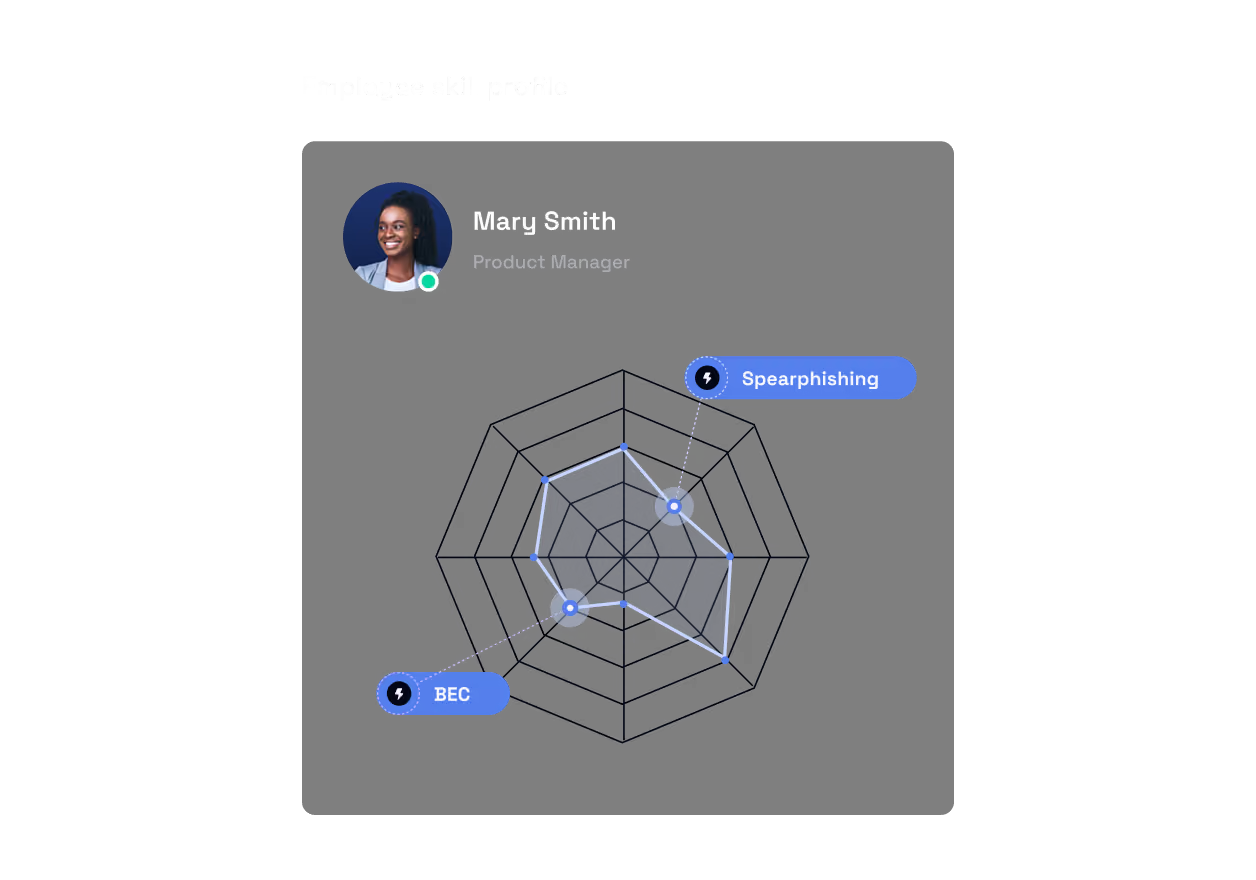
Hoxhunt adjusts three things for every employee: how hard the simulation is, what it is about, and how often it arrives.
Difficulty that follows the person
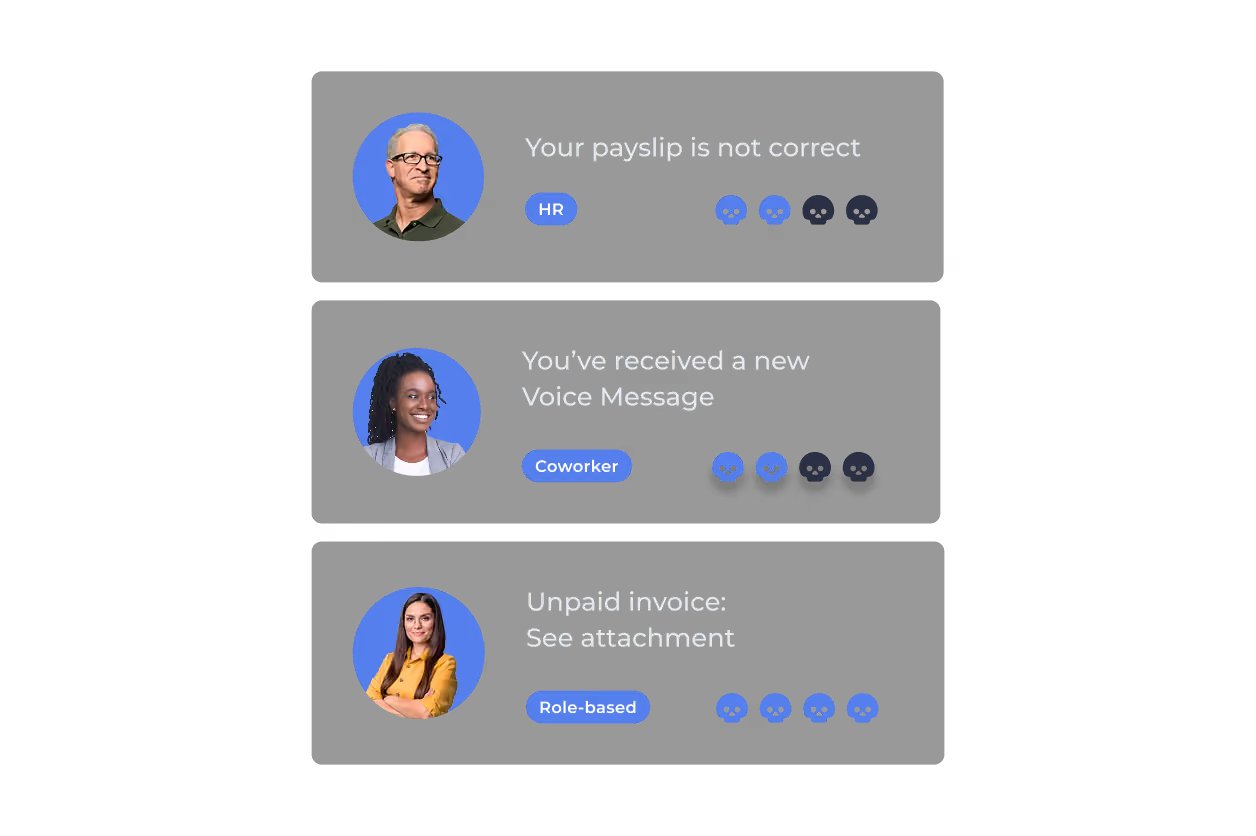
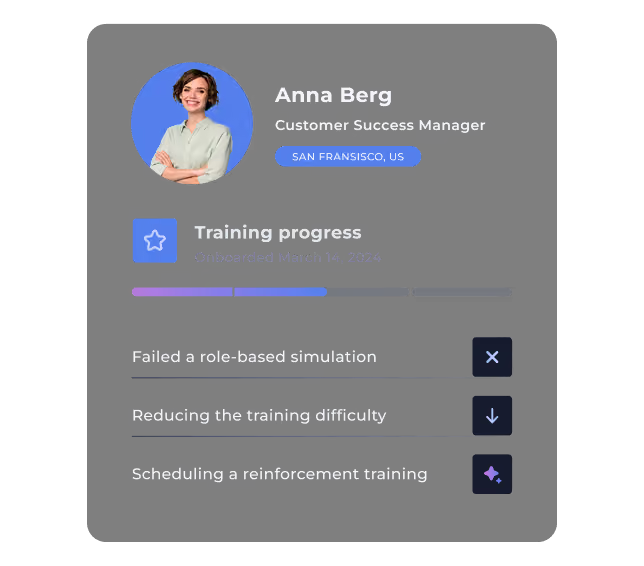
A skill algorithm raises the difficulty after consistent success and eases it after repeated failures, so every employee is challenged and able to succeed.
Lessons that land after a win
Employees who report a simulation complete the follow-up lesson 4.5 times as often as employees who click one. The moment of success is when people are ready to learn.
Topics drawn from real attacks
The simulation library is refreshed from real attacks reported across the Hoxhunt network, so employees practice on what attackers are sending now.
Built for security awareness teams
A program that adapts on its own, inside limits you set
The threat intelligence source
Choose whether topics follow global, industry, regional, or your own reported threats.
Grounding rules
Write an instruction in plain language, such as a tax-season push for finance, and target it by department, country, or job function.
Cadence limits
Set frequency limits per group so higher-risk employees practice more and others are not flooded.
Review of AI content
AI-generated content goes through admin review and approval before it reaches employees.
Guardrails for sensitive groups
Apply specific rules to executives and other high-risk groups.
Conditions for extra practice
Define how many clicks start the faster cadence and what ends it.
Each simulation matches the person
Simulations are personalized by role, department, location, language, and past behavior.
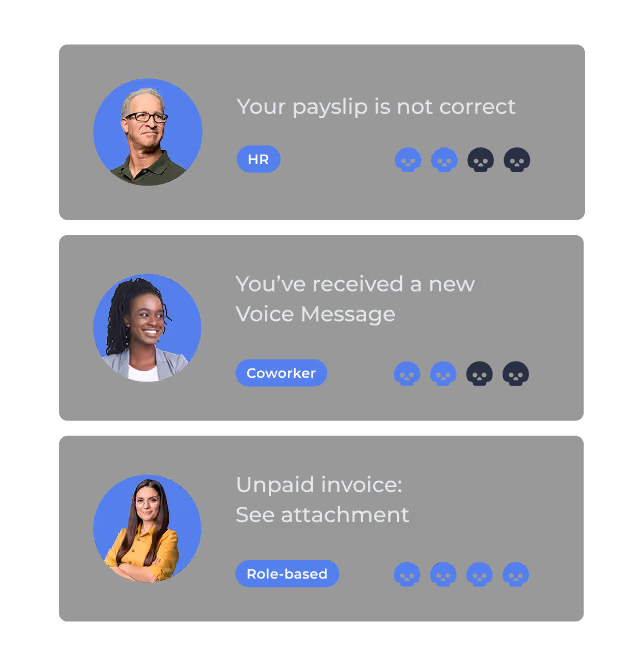
The skill algorithm sets the difficulty
Difficulty rises after consistent success and eases after repeated failures, so every employee is challenged and able to succeed.
A report triggers a short lesson
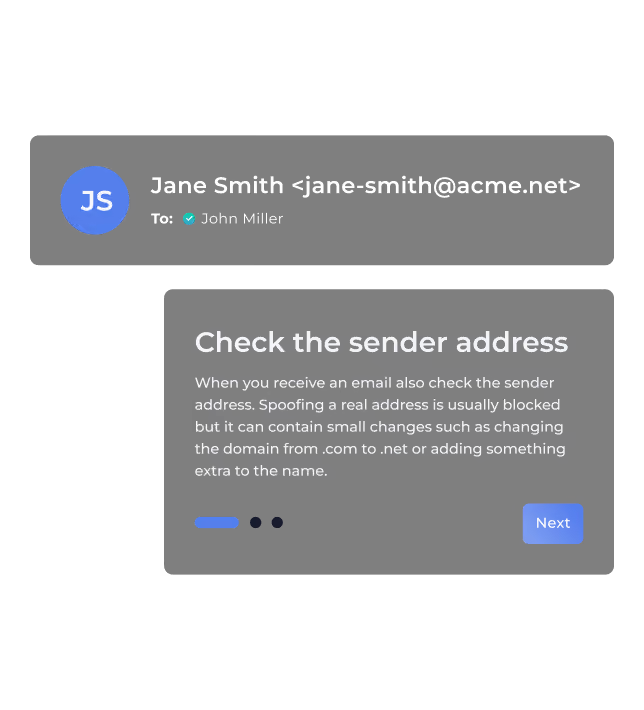
When an employee reports a simulation, a lesson of 30 to 120 seconds follows while they are paying attention.
Content follows current attacks
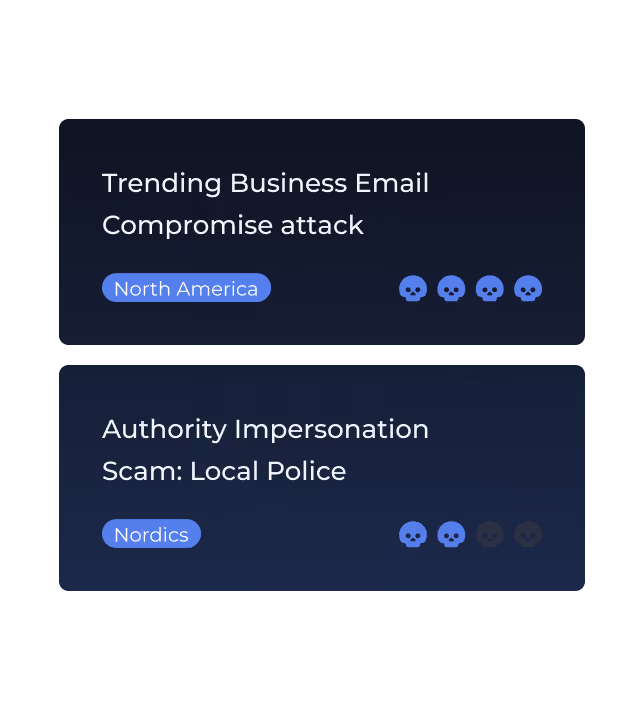
The library is refreshed from real attacks reported across the Hoxhunt network. An AI agent can steer topics toward the attacks seen in the last seven days, globally, in your industry, in your region, or in your own organization.
Repeat clickers get more practice
Employees who click too often get simulations about 50% more frequently. Reporting one returns them to the normal cadence straight away.
“With Hoxhunt, more than 85% of our employees now actively use the report-phishing button, and our fail rate has dropped from about 15% to under 2%. Teams even compare their leaderboard positions in our Monday meetings.”
Marcus Beyer, Security Awareness Training Officer, Swisscom
6 million people practice with Hoxhunt, on 11 million simulations a month


Frequently asked questions
Can employees game personalized simulations?
Personalization aims at relevance. Difficulty rises for employees who do well, so the practice keeps challenging them.
How do simulations stay current?
The library is refreshed from real attacks reported across the Hoxhunt network, so customers practice on attacks seen at other organizations.
Can we limit what the AI does?
Yes. Guardrails apply to executives and high-risk groups, and AI-generated content goes through admin review and approval before it goes live.
Is extra practice for repeat clickers a punishment?
No. The simulations stay at a difficulty the employee can handle, and reporting one ends the faster cadence immediately.
How many simulations does an employee get?
Between 30 and 36 a year, each followed by a lesson of 30 to 120 seconds when the employee reports it.
See the path one employee would follow
Book a demo and walk through a simulation as an employee sees it, the lesson that follows a report, and the admin settings behind both.
 A simulation and its follow-up lesson
- The skill profile for an employee
- Grounding rules and cadence settings